Selected work
The work.
12 pieces and 3 short clips. All black and grey, all designed, drawn and tattooed by me.
Selected work
12 pieces
-
Sculpture & figures -
Portraits -
Sculpture & figures -
Animals -
Sculpture & figures -
Anatomy -
Animals -
Sculpture & figures -
Sculpture & figures -
Botanical -
Animals -
Sculpture & figures
What the style does with each subject
Written against the work above
Black and grey has one variable to work with: value — how light or dark one area sits against the one beside it. What changes from subject to subject is what that single variable is being asked to do. The guide to black and grey versus colour covers how the two differ. The note on how I work goes into how a piece gets planned for a body.
Portraits
1 piece above
A face is the least forgiving subject in the style, because everyone looking at it already knows what a face does. There is no second variable to fall back on: a cheekbone separates from the shadow beneath it only by the distance between two greys, so the likeness is settled by where the light is placed, before any detail goes in.
That is why reference matters more here than anywhere else. A photograph with a real light source and a real shadow side gives something to build from. A flat, front-lit phone snap gives almost nothing, and no amount of work at the needle will put back what the source never had.
The calf piece above pushes that further by breaking part of the face into faceted planes. It only holds together because the tone carries through the break — the eye reads one head, lit one way, in spite of the interruption.
Sculpture and figures
6 pieces above
Carved stone is already a value study. Marble has almost no colour of its own, so a photograph of a bust carries close to the information the tattoo needs. That makes classical subjects the most direct translation black and grey can do — and the least forgiving of a soft drawing, because a plane that should turn sharply cannot be rescued by hue. It simply reads as a smudge.
The busts, statues, armour and figures here are built on hard shadow edges and rationed highlights. In each of them the brightest tone is a small area of skin left almost untouched, and that restraint is what makes polished metal read as metal rather than as pale grey. Spend the highlight everywhere and it stops meaning anything.
Animals
3 pieces above
Fur, scale and hide are texture problems rather than detail problems. Drawing every scale on the crocodile would flatten it; the piece has to choose which few rows catch the light and let the rest fall away into the dark. The lion works the same way — the mane is a handful of lit strands sitting over a mass that is almost entirely tone.
In the dinosaur piece the ferns are structural rather than decorative. They hold the negative space that gives the animal an edge to sit against, which is what stops a large dark subject dissolving into the skin around it.
Anatomy
1 piece above
The skeletal foot is the clearest example on this page of the style working through negative space. The bones are not drawn dark — everything around them is. Solid black is laid in between and behind the structure, and what reads as bone is the skin left comparatively clean, which is why a piece like this depends on the black staying genuinely black.
Anatomy is also the one subject where the reference is already under the skin. The drawing is set against where the bones actually sit on that body, rather than against a photograph of somebody else’s.
Botanical
1 piece above
Botanical work is the quietest thing on this page and the hardest to under-do. The framed piece holds nearly all of its tone in a narrow band of light greys, with the linework of the frame and the cord carrying the structure instead of the shading. Where a portrait runs the full range from solid black to bare skin, this one deliberately never reaches either end.
The lightest washes are also the first thing sun takes out of a black and grey tattoo, which is why work in this register asks the most of aftercare.
Nothing on this page is presented as healed work. Healing is not something that can be judged from a photograph, so it is not claimed from one — and how a piece is looked after does as much for how it reads in ten years as anything decided in the chair.
Tattoo in motion
Silent · press play
A still photograph flattens a piece that wraps a limb. These are short, silent clips — nothing loads until you press play, and there is no sound track.
-
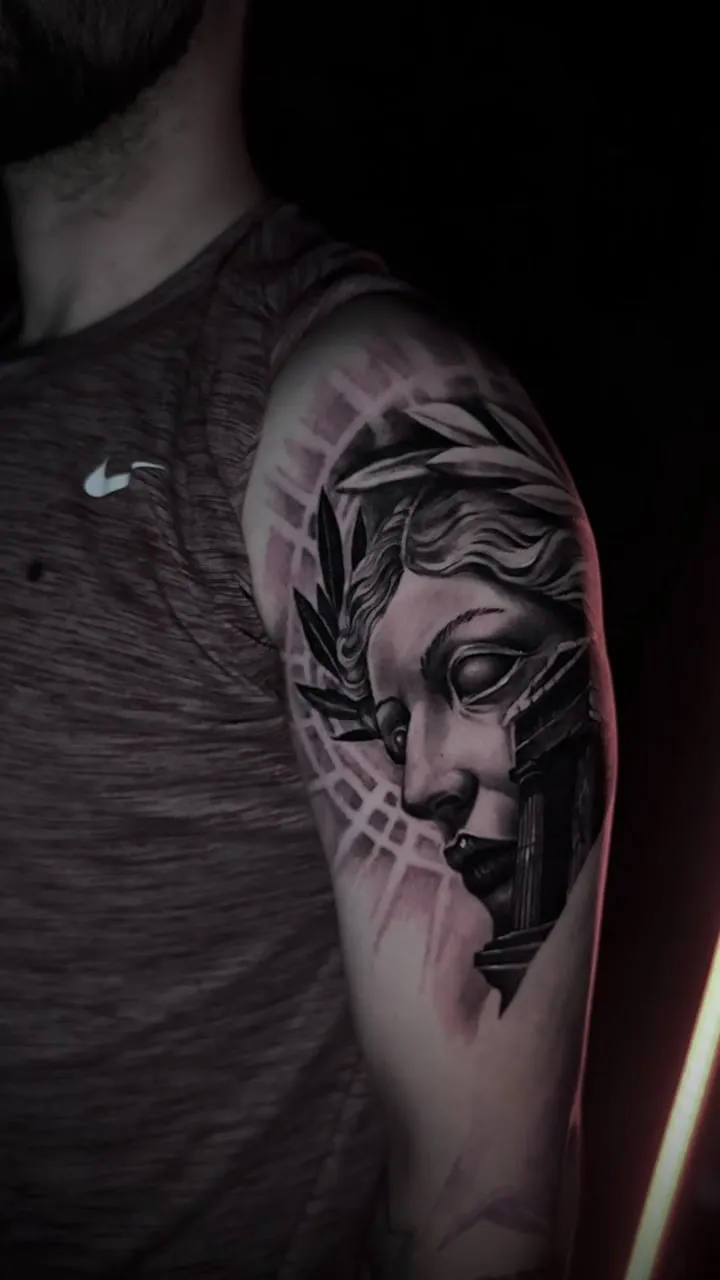
Classical statue, upper arm -
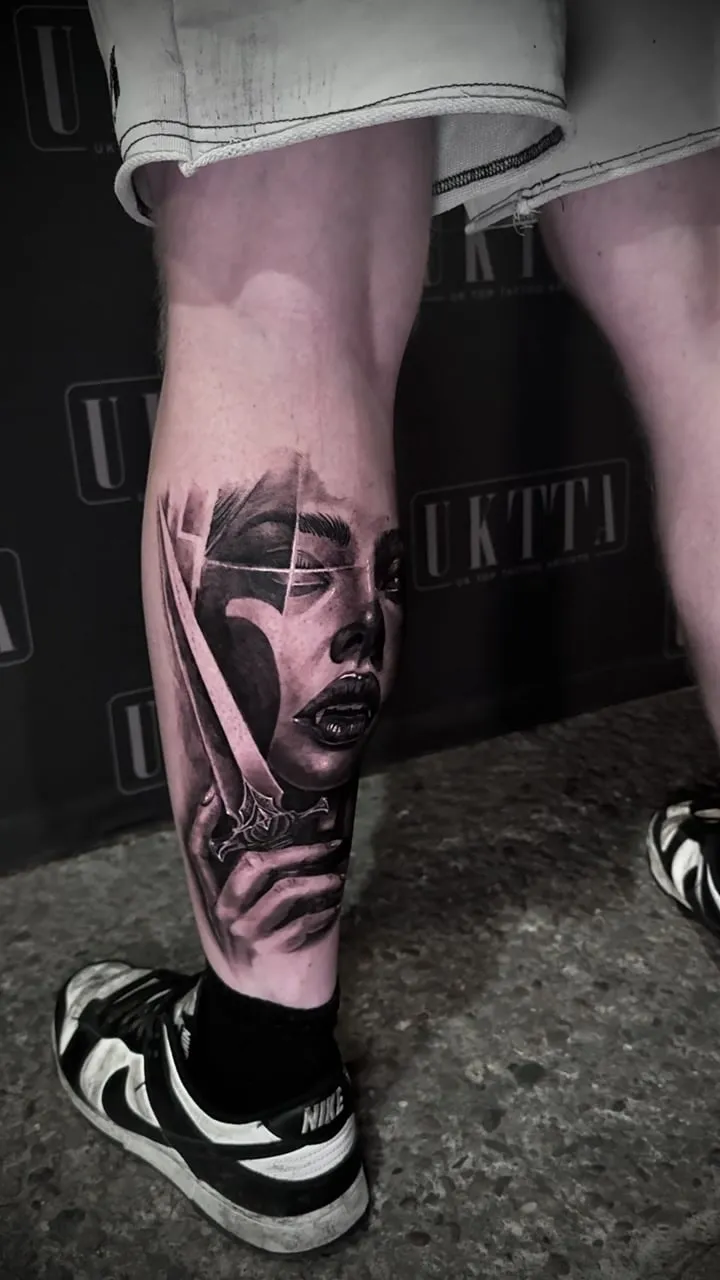
Portrait, calf -
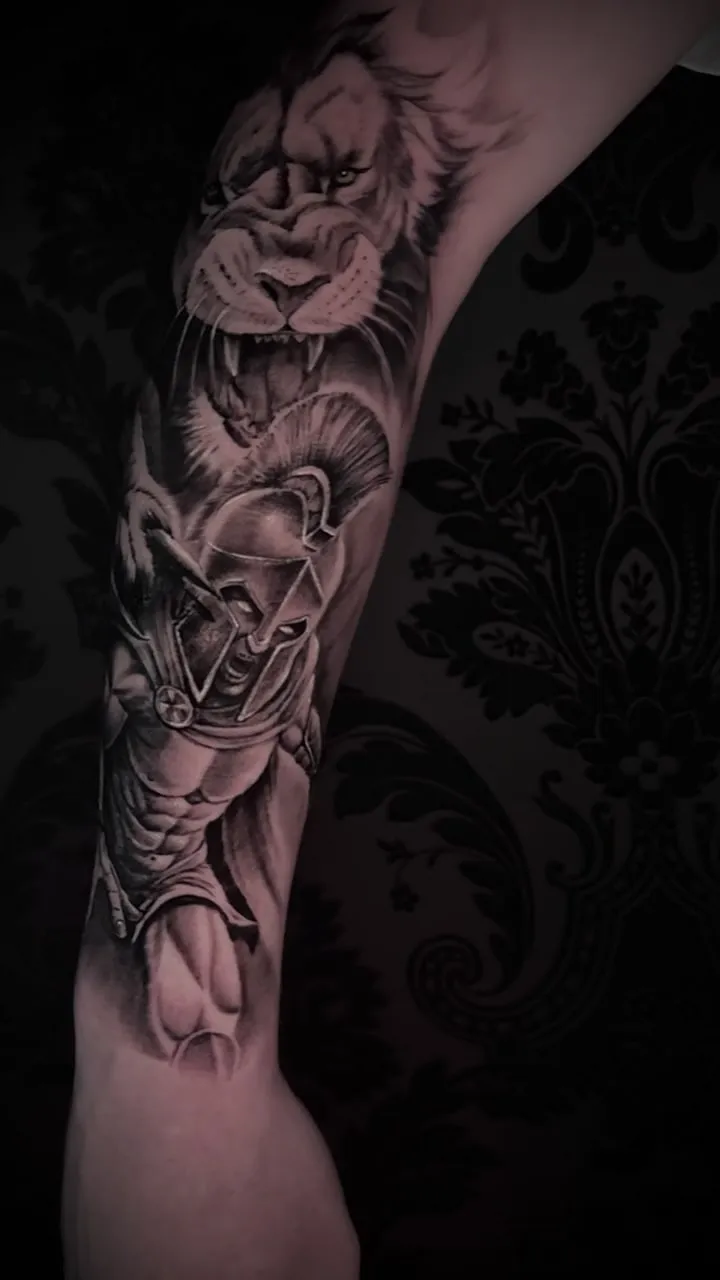
Large-scale leg piece
Seen something that fits?
Send the references and the placement. You will get an honest answer on whether it holds at the size you have in mind.
- sigiskasp@gmail.com
Send references, placement and a rough size.
- @sigiska_ink (opens in a new tab)
Direct message. Usually the quickest reply.
- +44 7400 274424
Appointments are by arrangement.